

A £50 million international property acquisition in Belgravia shouldn't stall because a Power of Attorney requires an urgent seal. You recognise that for your most prestigious clients, time is the only currency that cannot be recovered, and the traditional requirement to visit a notary's office is often an impossible friction point. Securing a mobile notary for private banking clients who understands the gravity of these transactions is essential for maintaining the momentum of global wealth management whilst ensuring absolute data security.
This article serves as your definitive 2026 checklist for ensuring every high-value document is executed with absolute discretion and technical precision. We'll outline how to navigate the latest regulatory updates, including the 2026 Money Laundering Regulations and the New Notaries Rules effective this April. From coordinating same-day apostilles to managing complex cross-border legalisations at a private residence or bank, you'll learn how to guarantee zero-friction compliance for your most time-sensitive legal needs. Whether you're a private banker or a High-Net-Worth Individual, this guide ensures your international legal obligations are met with the calm efficiency of a seasoned legal expert.
Key Takeaways
- Understand why high-stakes transactions in Central London require a mobile notary who prioritises discretion and on-site security at your private bank or residence.
- Identify the precise certification requirements for international Powers of Attorney and Trust Deeds to ensure seamless cross-border wealth management.
- Utilise our 2026 checklist for a mobile notary for private banking clients to verify jurisdiction-specific mandates and prepare valid identification for immediate execution.
- Navigate the complexities of the Hague Apostille and understand why same-day legalisation has become the non-negotiable standard for urgent financial compliance.
- Discover the strategic advantage of engaging a STEP-qualified private wealth lawyer who offers a mobile-only service tailored for Mayfair and Belgravia family offices.
The Role of a Mobile Notary for Private Banking Clients
In the sophisticated ecosystem of London's financial districts, a Notary Public serves as a vital bridge between domestic wealth management and international legal validity. For the private banking sector, this role transcends mere document witnessing. It involves the meticulous authentication of high-value instruments where the margin for error is non-existent. Engaging a mobile notary for private banking clients ensures that these legalities are handled with the gravity they deserve, directly at the point of need.
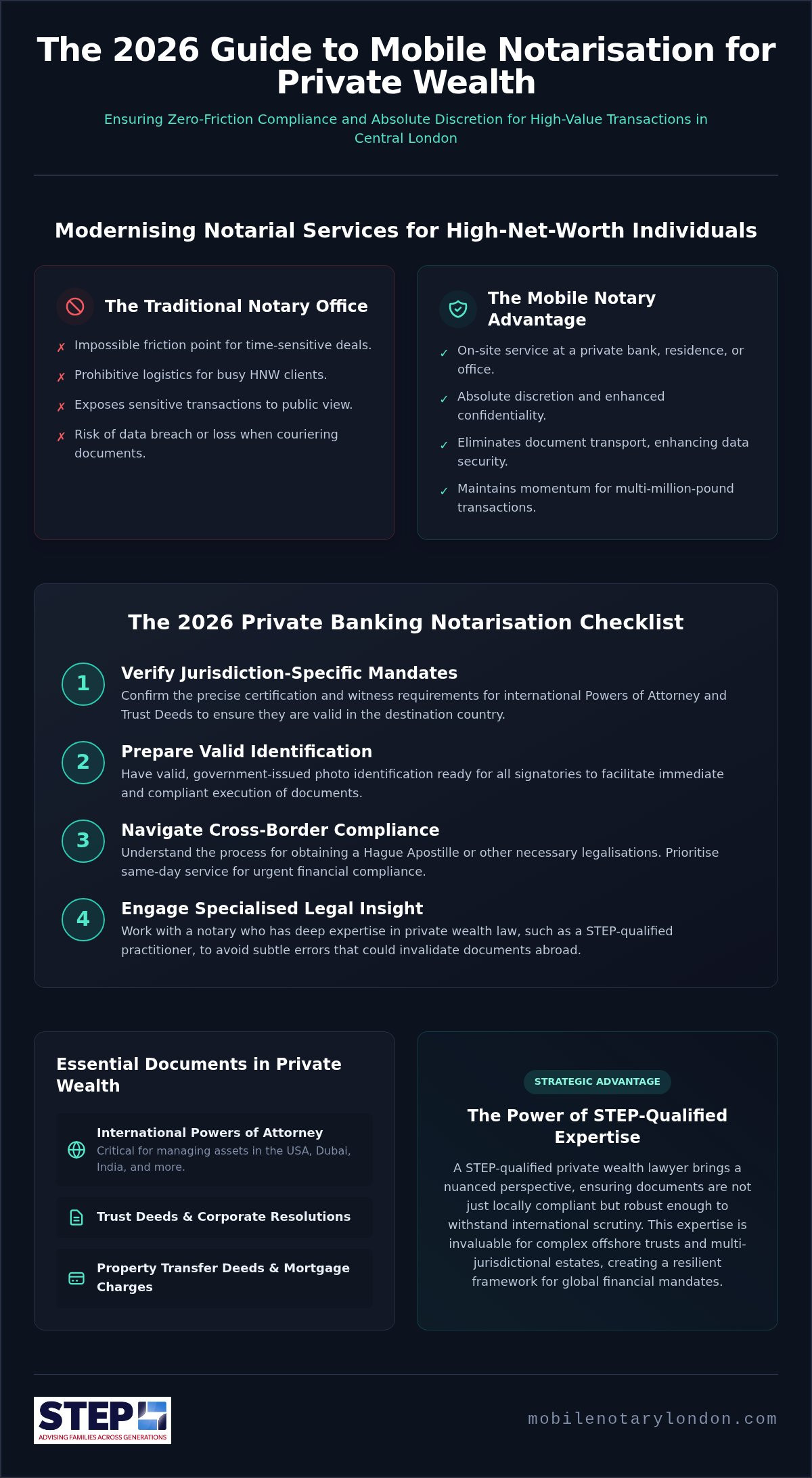
Private banks and family offices in the City and West End frequently require on-site notarisation to maintain the momentum of complex transactions. When a multi-million-pound asset transfer depends on a single signature, the logistics of transporting a High-Net-Worth Individual (HNWI) to a traditional office are often prohibitive. A mobile service eliminates this friction. It allows the legal professional to integrate seamlessly into the client's existing workflow, whether that's within a secure boardroom or a private residence.
Discretion and Privacy in Belgravia and Mayfair
For clients residing in Belgravia or Mayfair, privacy is a functional requirement rather than a luxury. Traditional office visits can expose sensitive dealings to public view, which is why many wealth managers prefer the controlled environment of a mobile notary visit. This approach offers several distinct advantages:
- Enhanced Confidentiality: Conducted within secure bank offices or private homes, the notarisation process remains shielded from third-party observation.
- Reduced Footprint: Sensitive documents don't need to be couriered across London, reducing the risk of data breaches or physical loss.
- White-Glove Standards: The service mirrors the premium experience clients expect from their banking partners, prioritising comfort and absolute discretion.
The Need for Specialised Legal Insight
Complex private wealth structures, such as offshore trusts and multi-jurisdictional estates, require more than a standard certification. A notary without a deep understanding of private wealth law may struggle to identify subtle errors in document drafting that could lead to rejection by foreign authorities. This is where the expertise of a STEP-qualified practitioner becomes invaluable. They bring a nuanced perspective to the authentication process, ensuring that the documents don't just meet local standards but are robust enough to withstand international scrutiny.
The integration of private wealth legal expertise with mobile notarial services creates a resilient framework for the secure execution of global financial mandates in 2026.
Essential Documents in Private Wealth and Family Office Management
High-value wealth management is built upon a framework of precisely executed legal instruments. When managing multi-jurisdictional assets, the quality of notarisation is not just a formality; it's a prerequisite for the validity of the entire transaction. A mobile notary for private banking clients must be adept at handling a diverse range of complex documents that reflect the intricate nature of modern family offices.
Asset protection often involves corporate resolutions for family-owned investment vehicles. These documents must be authenticated to prove the authority of directors or signatories before international banks will release funds or approve acquisitions. Similarly, high-value property transactions in prime central London or overseas require the meticulous certification of transfer deeds and mortgage charges. Failure to meet the specific requirements of a foreign land registry can result in costly delays that jeopardise a deal.
International Powers of Attorney
The Power of Attorney (POA) is perhaps the most critical document in international asset management. Whether it's for managing properties in Dubai, accessing bank accounts in the USA, or handling investments in India, the document must adhere to the receiving country's specific legal standards. Some jurisdictions require specific wording or the physical presence of witnesses alongside the notary to be valid. For a deeper look at these requirements, see our Power of Attorney Notarisation London Guide 2026.
Trusts, Estates, and Wills
Trust Deeds and beneficiary certifications are foundational to family office operations. These documents often require notarisation to facilitate the transfer of assets into a trust or to prove a beneficiary's status to a foreign tax authority. In matters of cross-border probate, the certification of a Will is essential to allow executors to manage assets located outside the UK. For professional guidance on this process, refer to our article on notarising a Will for use abroad.
Navigating these requirements often involves official UK document legalisation, which confirms the notary’s signature and seal for use by foreign governments. Ensuring these steps are handled correctly from the outset prevents the frustration of rejected paperwork. If you are coordinating a sensitive transaction and require expert assistance, you can arrange a consultation with our mobile team to discuss your specific documentation needs.
The 2026 Private Banking Notarisation Checklist
Efficiency in private banking hinges on meticulous preparation. When a mobile notary for private banking clients arrives at a Mayfair residence or a boardroom in the City, the process must be executed with precision. Any oversight in documentation can lead to rejection by foreign registries, causing significant delays in high-value asset transfers. To ensure a zero-friction experience, professionals should adhere to this technical checklist before the appointment.
First, verify the exact requirements of the receiving jurisdiction. Does the document require a Hague Apostille or full Embassy legalisation? Second, ensure all signatories have valid, original government-issued photo ID. Photocopies or digital images are never sufficient for formal authentication. Third, confirm if specific witnesses are required by the document; these individuals must often be independent of the transaction. Fourth, prepare proof of address documents, such as utility bills or bank statements, which must be dated within the last three months. Finally, review the entire document for any blank spaces or uninitialled corrections that could compromise its integrity.
Identity Verification Standards
The authentication of identity is a cornerstone of notarial practice. High-Net-Worth Individuals often hold multiple citizenships or complex residency statuses, making rigorous verification essential. Notaries in England and Wales are regulated by The Faculty Office, and they must adhere to stringent Anti-Money Laundering (AML) standards. Acceptable forms of identification typically include biometric passports and international driving licences. For foreign nationals, the notary must ensure the ID is valid and provides a clear link to the individual's legal identity as stated in the document being signed.
Document Readiness and Format
Successful notarisation begins before the physical meeting. It's often beneficial to provide a digital draft of the document to the mobile notary for private banking clients for a preliminary review. This allows for the identification of potential jurisdictional conflicts or missing clauses. If the document isn't in English, it must be accompanied by a certified translation, as the notary must understand the nature of the instrument they're certifying. Uninitialled changes or handwritten amendments can invalidate a notarised document because they suggest the possibility of unauthorised tampering after the certification was applied. Ensuring the final hard copy is clean and complete preserves the validity of the legal act.
Navigating Cross-Border Compliance and Apostilles
Authenticating a signature is only the first step in a complex chain of international validation. For documents intended for use abroad, the Hague Apostille acts as a universal certificate of authenticity, verified by the Foreign, Commonwealth & Development Office (FCDO). In 2026, the FCDO continues to be the sole issuing authority in the UK, but the speed of processing often dictates the success of a high-value wealth transfer. When a mobile notary for private banking clients facilitates a transaction, they don't just witness a document; they oversee the entire legalisation pathway to ensure it meets the rigorous standards of foreign jurisdictions.
Whilst many countries are signatories to the Hague Convention, others, such as the UAE, Qatar, and Saudi Arabia, require a more intensive process known as embassy legalisation. This involves additional verification steps at the relevant consulate or embassy after the FCDO has issued the apostille. For private banking professionals, managing these layers of bureaucracy requires a proactive approach to prevent documents from becoming stalled in administrative queues. Precision at this stage is non-negotiable.
Fast-Track Legalisation for Global Assets
Time is often the most critical factor in private wealth management. Standard postal services can take weeks, which is why same-day or urgent apostille services have become the benchmark for London's financial elite. Coordinating between a mobile notary, the FCDO, and various London-based embassies requires precise logistics and absolute document security. If you're managing a time-sensitive filing, our Urgent Apostille London: A 2026 Buying Guide provides a detailed roadmap for navigating these fast-track requirements without compromising on confidentiality.
Dealing with Multi-Jurisdictional Transactions
HNWIs frequently operate across several countries simultaneously, necessitating the certification of "bundles" or portfolios of documents. A single transaction might require notarisation for a property in France, a trust in the Cayman Islands, and a corporate resolution for a Swiss bank. A specialised notary understands how to structure these bundles to minimise fees whilst ensuring each document carries the necessary weight in its respective jurisdiction. You can learn more about our Notary and Apostille Services and how we streamline these multi-layered requirements for complex family office structures.
If your current transaction involves complex international compliance and requires the attention of a seasoned expert, contact our specialist team today to ensure your documents are legalised with the speed and precision your clients demand.
Sheikh Najam: Specialised Support for Central London’s Financial Sector
Sheikh Najam provides a bespoke service that bridges the gap between technical legal counsel and on-demand administrative execution. As a STEP-qualified Private Wealth Lawyer, he brings a level of expertise to the role of a mobile notary for private banking clients that standard practitioners often lack. This qualification signifies membership in the Society of Trust and Estate Practitioners, ensuring a deep understanding of the underlying legal architecture of trusts, estates, and international wealth structures. It allows for the proactive identification of technical issues within complex deeds or powers of attorney before they jeopardise a high-value transaction.
The mobile-only nature of the practice is a deliberate choice designed to serve the specific needs of Mayfair and Belgravia. By removing the requirement for a traditional office visit, Sheikh Najam offers a level of discretion and convenience that aligns with the expectations of the world’s most discerning clients. Same-day availability for urgent private wealth matters ensures that even the most aggressive deadlines for international asset transfers are met with calm, methodical efficiency. This approach facilitates a seamless transition from the initial notarisation to broader international private wealth advice, providing a holistic resource for wealth managers and their clients.
A Premium Service for Family Offices
Family office managers and wealth advisors require a partner who understands the nuances of high-stakes financial environments. Sheikh Najam offers tailored solutions that integrate seamlessly with the operations of prestigious institutions across London's most exclusive postcodes, including W1, SW1, and EC2. Whether the requirement is for a secure boardroom in the City or a private residence in Knightsbridge, the service remains consistently professional and technically rigorous. This "white-glove" approach ensures that the legal process never detracts from the premium client experience. For more details on these bespoke arrangements, read about our Mobile Notary Central London: Premium On-Site Solutions.
Booking Your Premium Appointment
Arranging a priority call-out for a private banking client is designed to be a frictionless process. Recognising the time-sensitive nature of international legalisation, the practice prioritises agility and clear communication from the initial contact through to the final delivery of legalised documents. You can book a mobile notary appointment via Calendly to secure a specific time slot that suits your client's schedule. Understanding why to choose a mobile notary for your private wealth needs is the first step in ensuring that your documentation is handled by a specialist who prioritises both legal validity and client convenience. By engaging a practitioner who is both a notary and a private wealth specialist, you ensure that every document is not just signed, but legally robust for its intended global purpose.
Securing Your Global Financial Interests
Navigating the complexities of international wealth management in 2026 requires more than just a signature; it demands a proactive approach to legalisation and a deep understanding of jurisdictional mandates. By following a rigorous checklist and preparing your documentation in advance, you ensure that high-value transactions proceed without administrative friction. This level of precision is what protects the integrity of your global portfolio whilst respecting the tightest of deadlines.
Engaging a mobile notary for private banking clients who is also a STEP-qualified Private Wealth Lawyer provides the specialised oversight necessary for complex trusts and powers of attorney. This combination of legal authority and mobile flexibility guarantees that your most sensitive documents are handled with the discretion they deserve. Whether you require same-day Central London visits or expert guidance on international legalisation, the right professional support is essential for maintaining momentum.
If you're ready to ensure your documents meet the highest global standards, secure your premium mobile notary appointment today. Your international legal obligations don't have to be a source of stress when you have a seasoned expert managing the details for you.
Frequently Asked Questions
What is the benefit of using a mobile notary for private banking?
The primary benefit of engaging a mobile notary for private banking clients is the preservation of absolute discretion and time efficiency. By facilitating notarisation at a private residence or secure bank office in Central London, the service eliminates the need for high-profile individuals to travel to a traditional legal office. This on-site approach ensures that sensitive documents remain within a controlled environment, maintaining the white-glove experience expected by private wealth tiers.
Can a mobile notary come to a bank office in the City of London today?
Yes, we specialise in same-day mobile visits across the City of London and the West End. Our practice prioritises urgent requests from financial institutions and family offices to ensure that time-sensitive transactions proceed without delay. Whilst we don't provide a 24/7 emergency service, we are geared towards providing rapid, on-demand support during business hours for clients in prestigious postcodes like EC2, W1, and SW1.
Does a private banking client need to provide original ID?
Every signatory must provide a valid, original government-issued photo ID at the time of the appointment. Digital copies, scans, or photographs are not sufficient for the rigorous verification standards required by the Faculty Office. Acceptable forms of identification typically include a current biometric passport or an international driving licence. This physical verification is a critical component of Anti-Money Laundering compliance and ensures the international validity of the notarised instrument.
How much does a premium mobile notary service cost in Central London?
Fees for a premium mobile notary service in Central London are generally determined by the complexity of the documents and the urgency of the request. Total costs typically include a professional fee for the notarial act itself and a travel fee for the on-site visit to your location. Because private banking requirements often involve multi-jurisdictional compliance or urgent legalisation, we provide bespoke quotes based on the specific scope of the documentation and any required embassy filings.
Can you notarise documents for use in the UAE or Saudi Arabia?
We provide comprehensive support for documents intended for use in non-Hague Convention countries like the UAE, Qatar, and Saudi Arabia. These jurisdictions require more than just a standard notarisation; they often necessitate a multi-step process involving the FCDO and specific embassy legalisation. For clients seeking expert legal counsel on the ground in Riyadh, you can check out شركة علي المسردي للمحاماة. Our team manages these complex logistics to ensure your corporate resolutions or powers of attorney meet the precise requirements of Middle Eastern financial authorities and registries.
A STEP-qualified lawyer is a member of the Society of Trust and Estate Practitioners, representing the highest standard in private wealth legal expertise. This qualification is significant for notarisation because it ensures the practitioner understands the underlying legal architecture of the documents they are certifying. For a mobile notary for private banking clients, this background allows for a more nuanced review of complex trust deeds and international estate documents, reducing the risk of technical errors.
Is an Apostille always required for private banking documents used abroad?
An apostille is required for the vast majority of documents intended for use outside the UK to verify the notary's signature and seal. Whether it is necessary depends entirely on the requirements of the receiving jurisdiction and the specific bank or authority involved. We always recommend verifying this requirement with the foreign recipient in advance, as omitting an apostille can lead to the document being rejected by international registries or financial institutions.
Can you notarise a Power of Attorney for a property sale in India or Spain?
Can you notarise a Power of Attorney for a property sale in India or Spain?
Yes, we frequently notarise powers of attorney for property transactions in jurisdictions including India, Spain, and the USA. These documents often have specific format requirements and may require witnesses to be present during the signing. For transactions involving Texas assets, clients often work with firms like Massingill Attorneys & Counselors at Law to ensure their documents align with state-specific estate and business laws. Our mobile service allows these high-value property documents to be executed at your convenience in Central London, ensuring they are prepared correctly for subsequent legalisation and use by foreign land registries or legal counsel.
Article by
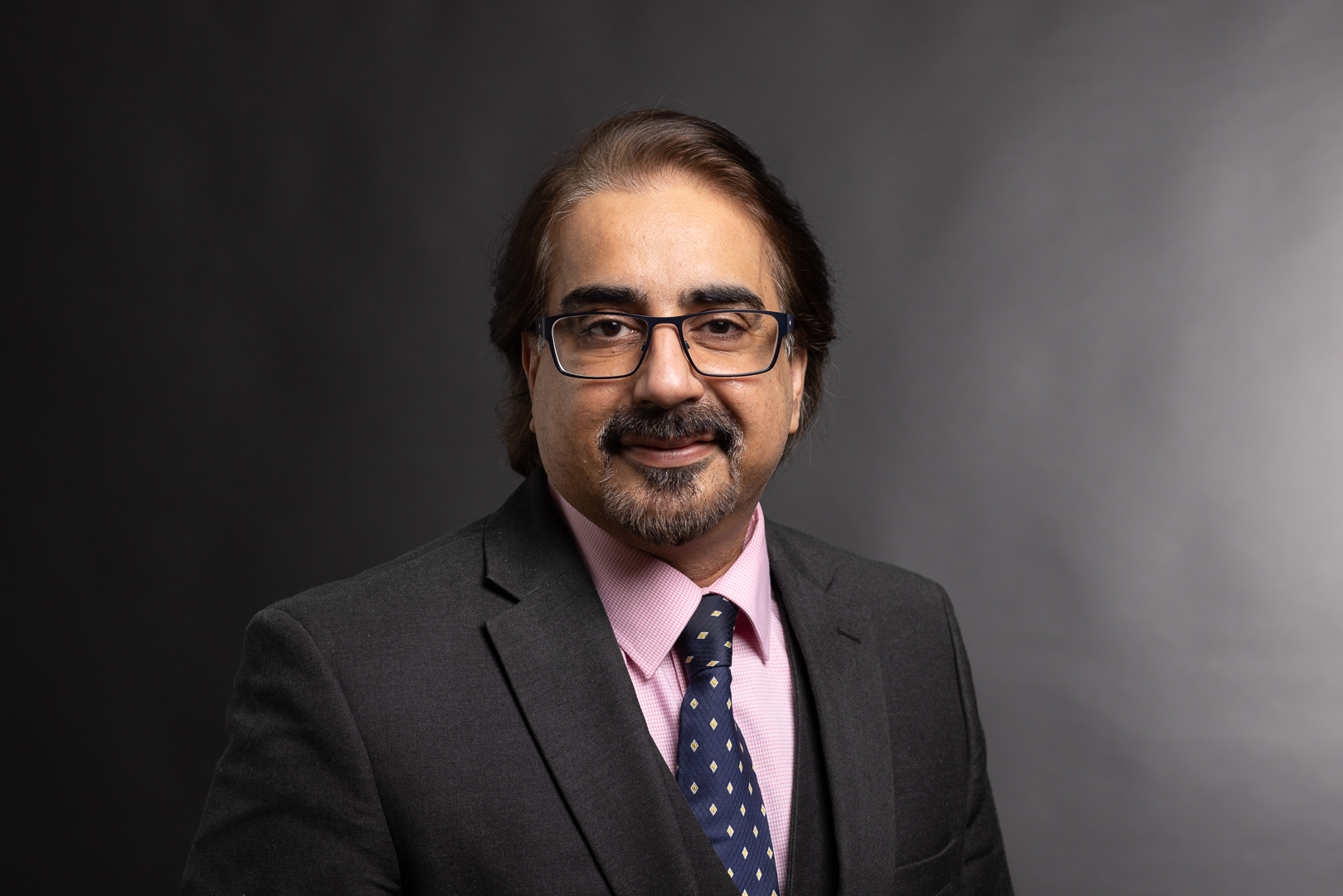
Sheikh Najam
Sheikh Najam LLB, TEP, MCIArb is a Notary Public and Commissioner for Oaths based in Central London, offering notary services to corporate, commercial and private clients across the City of London and beyond. His work includes notarising board and shareholder resolutions, powers of attorney, and certified copies of constitutional documents for use with foreign registries, banks and courts, with apostille and legalisation arranged as part of the same instruction. Alongside his notarial practice, he is a STEP-qualified international private wealth lawyer advising on cross-border transactions, company formation, trust drafting and succession planning. He is regulated by the Faculty Office (Court of Faculties) of the Archbishop of Canterbury and is a member of The Notaries' Society of England and Wales, STEP, and The Association of European Attorneys.


